
First Steps for an Iron County Warrant Search
Start with the sheriff's Check Warrants link, which leads to the free Utah Statewide Warrants search. That statewide file covers Utah felony, misdemeanor, and infraction warrants entered by courts. It is not a national search. It also cannot replace the clerk's current case record. Enter your legal name and whatever details the live form requests, since its exact labels and fields can change. When a hit names an Iron County court, call that court before paying anything or scheduling an appearance. A quick self-check is just the first read. The Iron County clerk's file is the one that settles status and next steps.
- Open the BCI warrant page and follow the statewide search link.
- Read the court and case details, if shown, and note the case or warrant number.
- Call Iron County Justice Court at its official contact page for local traffic, ordinance, or FTA cases.
- For a felony or district matter, contact Fifth District Court or counsel.
- Use the Sheriff’s records form only for an agency record, not for a court recall.
The BCI Search Fields We Could Verify
BCI's landing page advertises a free statewide warrant search. The live public screen does not always load for every visitor. Its technical guide covers authorized law-enforcement queries instead. Treat only the live screen, not that guide, as the source of Iron County form fields.
| Field or control | What research confirmed | Public-form status |
|---|---|---|
| Name | Authorized queries can use a name; the guide describes a starts-with default. | Public label not captured |
| Date of birth | Can narrow an authorized query. | Public availability unknown |
| SSN, license, or vehicle transaction | Authorized-system options only. | Do not claim these are public fields |
| Search and record detail | Underlying guide describes selecting a matched record. | Button and result labels not captured |
For an Iron County warrant check, use only the fields the live screen actually asks for, not the guide.
Xchange, MyCase, and Warrant Status
Utah Courts runs more than one case-information tool. Each has its own job. Xchange serves public case information through a guest search or an account. MyCase is for parties. After sign-in it can show your case history, filings, and payments. Neither is a complete, real-time statewide warrant roster. Use these tools to pull a docket or track your own activity in an Iron County case, then call the court the record names. A docket can point you to the right Iron County clerk. Only the court can confirm active status, payment terms, or a recall. The official MyCase explanation from the courts describes party case history and payments.
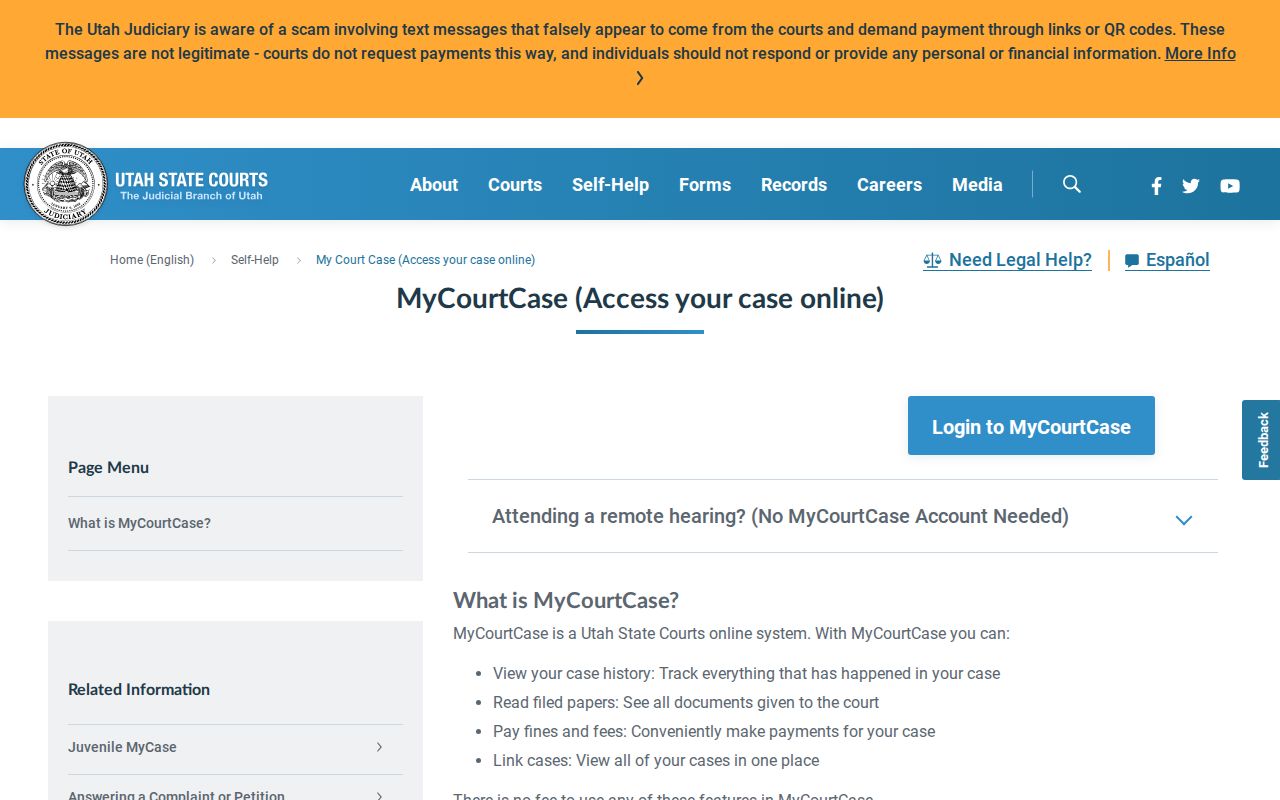
The image shows a case-access explanation, not a public warrant list.
What a Warrant Search Shows
A result may name a court or source, case and warrant numbers, a charge, and service details. The public screen may show less. BCI warns that one matched record can pool warrants from more than one court when identity details align. A name-only hit is a lead only. Confirm with the Iron County court before acting on it.
| Court/source | Points to the office that controls the case. |
|---|---|
| Case or warrant number | Gives the clerk a precise search key; Iron County’s local format was not verified. |
| Charge | Names the matter connected to the warrant. |
| Service status | Attempted, served, transporting, or notified describe agency steps, not the case outcome. |
| Recall status | Ask the issuing court whether the order was withdrawn. |
No Iron County result label sets a bond amount; the issuing court supplies the current terms.
Iron County GRAMA and Court Requests
Route each request to the office holding the record. The Iron County Sheriff's online GRAMA form asks for contact details, record category and status, a description, a cost agreement, and acknowledgments about restricted records and identification. Expect processing to take up to ten business days. An estimated fee may be due first. Court records follow a different path. Ask the correct court clerk in writing under the Utah court-record access rule. A Sheriff request cannot compel a court to release a court-held warrant or change its status. The Sheriff GRAMA form is the route for Iron County agency records, and its blank fields appear on the official form.
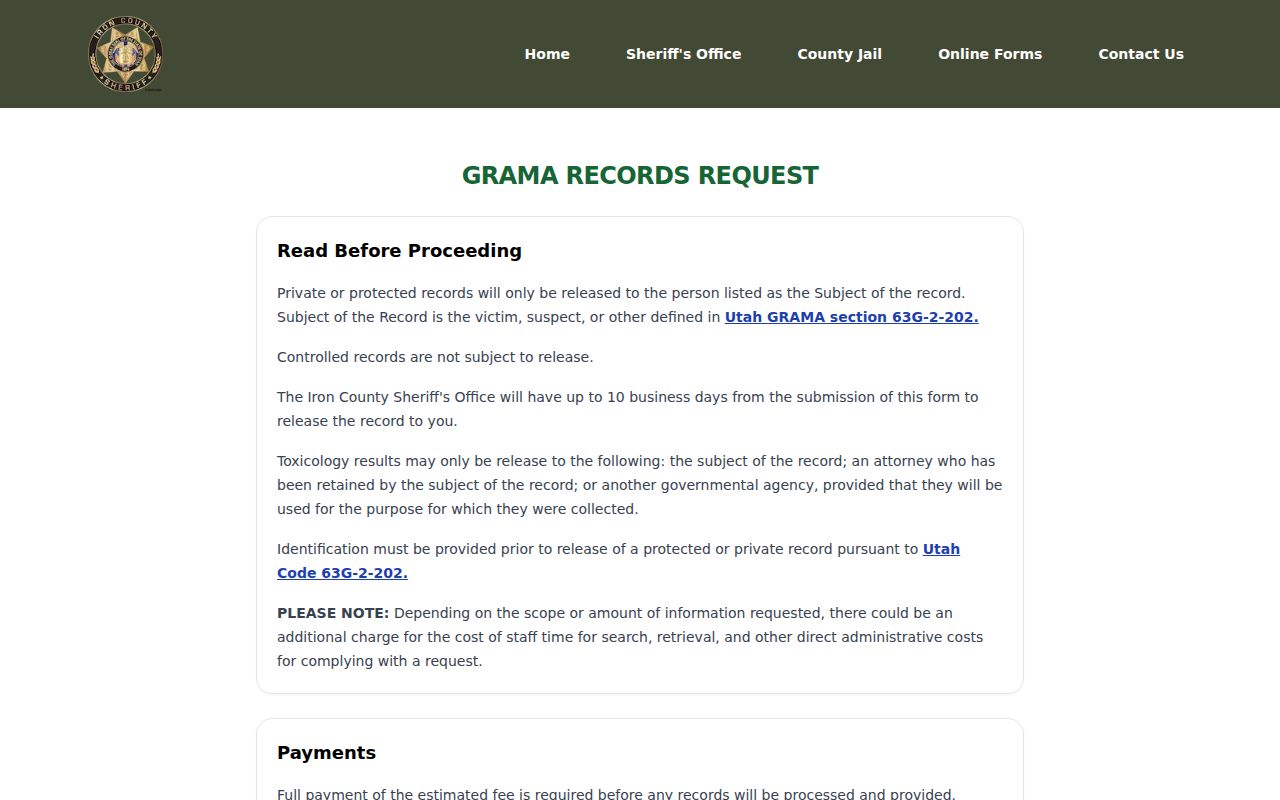
Describe the Iron County record narrowly, such as one service event tied to a date or case number.
Where to Check Warrants in Iron County
Match the record holder to the case type. Iron County Justice Court takes traffic, infractions, county and participating city ordinance matters, and the failure-to-appear warrants that grow from them. Fifth District Court keeps felony and district-case records. The Sheriff answers its own agency-record and service questions. The Jail handles custody and bond logistics.
Iron County Justice Court
Local traffic, ordinance, and FTA matters
435-865-5335
The elected Iron County Clerk is no court clerk. Parowan holds the county seat, yet the Justice Court counter sits in Cedar City.
When a Missing Result Is Not Clearance
A blank result is not clearance. New court entries can lag. So can a recalled or served record before the statewide file updates. A lower-court case may still need the Iron County clerk's direct check. The Justice Court payment search has its own delay, since a citation may not post for several days after filing, especially one sent manually. Federal, out-of-state, juvenile, sealed, and protected matters follow separate rules. A clean BCI result proves nothing statewide. Follow the source named on your notice, or ask the likely court to check its own file.
Search limit: Treat a blank screen as a prompt to confirm the filing court, not as a court order or a finding that a case is closed.
Restricted Warrants and Access Rules
Utah GRAMA and court rules sort records into public, private, protected, controlled, sealed, and juvenile classes. An issued arrest warrant may be public. Supporting documents or search-warrant materials can stay restricted. Juvenile matters never appear in ordinary adult-warrant results. For an Iron County record, ask the clerk which access rule applies and whether a written request or positive identification is required. The statewide active-warrant route is one part of the search, not a promise that every record is public.
Utah access routes: GRAMA governs many agency records; Utah court rules govern court files. The correct office depends on who maintains the record.
Positive Identification at the Court
BCI's guide allows a court to share information about its own warrant with a member of the public who shows positive photo identification. One court cannot hand out another court's warrant information. The guide also limits what law enforcement may disclose. No agency prints the warrant itself through that process. Bring the notice, citation, or case number if you have one, and ask the Iron County clerk which records are public. The Utah court-record rule sets out written requests and classification steps for the courts.
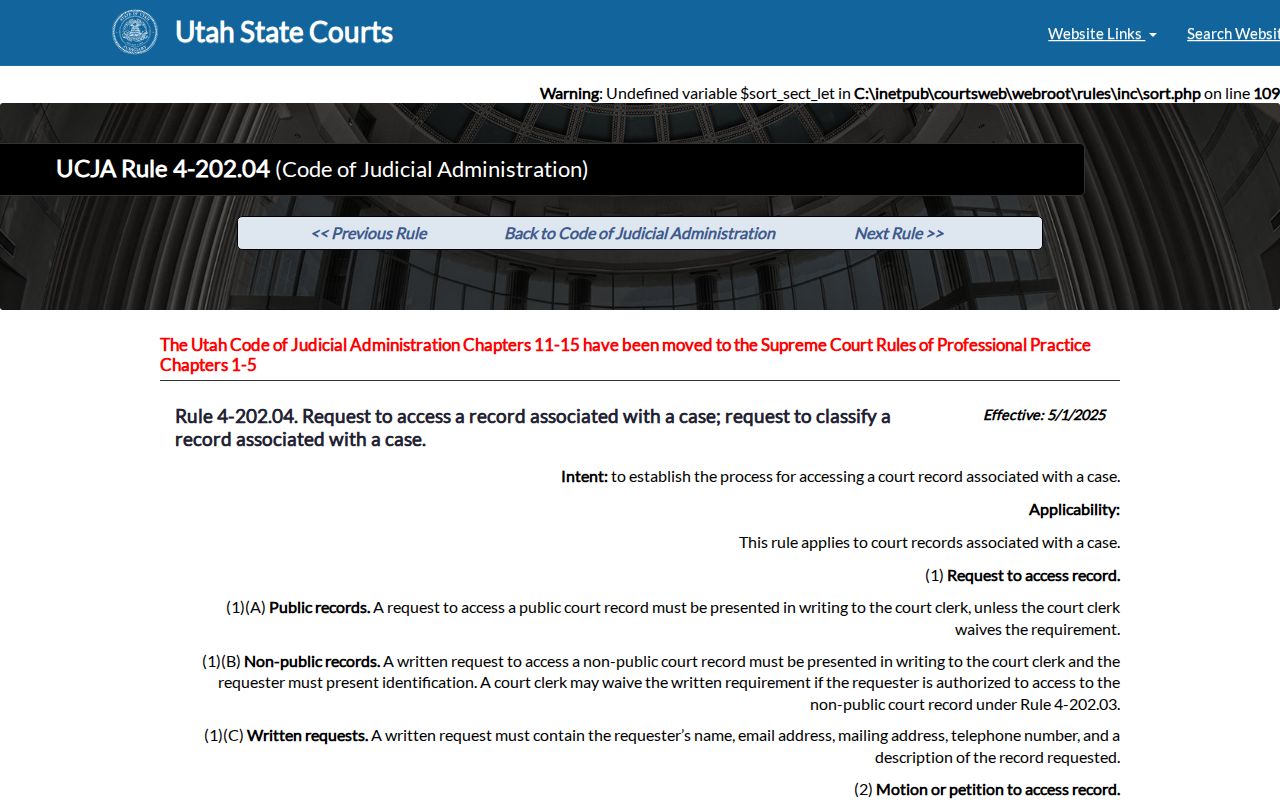
Identity checks and access limits apply to court records as well as agency records.