
Iron County Arrest Warrants Explained
Utah Code § 77-7-5 and Rule 6 give an Iron County judge or magistrate the power to issue an arrest warrant after a probable-cause review. Sometimes a summons works better. A warrant may be chosen when appearance seems doubtful, an address is unknown, or safety concerns tip the balance. It can also follow a failure to appear. Court and service records answer different questions. The court issues the order and can recall it; the named agency serves it and logs each service event. For a first Iron County warrant check online, use Utah's statewide system, then call the court. The official Rule 6 text lays out the summons and warrant process.
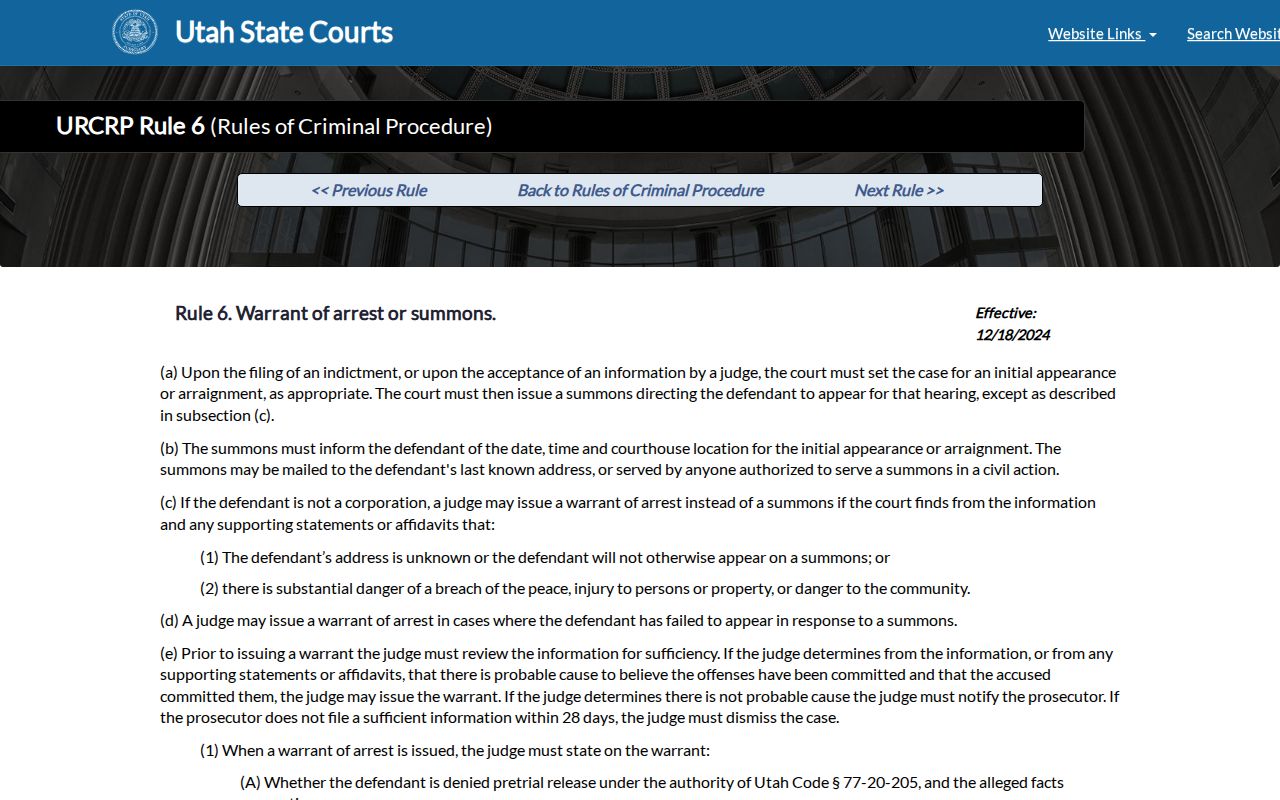
The rule tells Iron County courts how to act on warrants; it is not a public list of people or cases.
Probable Cause Before a Warrant
Probable cause is the factual basis an Iron County judge weighs before authorizing an arrest. A sworn statement, complaint, or information can support it. What the public sees may be narrower. A warrant file may show only the court, case, charge, and service details, while supporting affidavits or sealed filings carry separate access limits. A warrant is not a final decision on the charge. It authorizes an arrest or a court appearance, and the case then moves through its own hearings and decisions.
- Magistrate
- A judicial officer who may review a warrant request and release terms.
- Affidavit
- A sworn statement that can support a request.
- Summons
- A court notice to appear without an initial arrest warrant.
Inside an Iron County Arrest Warrant
The state guide describes a record that may tie personal identifiers to warrant details. A public result shows less. The sample is a field model, not a real person's record. No local Iron County warrant-number format is published.
| Court and case | Issuing court and case number. |
|---|---|
| Warrant details | Type, issue information, and charge or offense. |
| Release terms | Bond or other conditions, if public and ordered. |
| Serving agency | Agency named by the court or assigned to execute service. |
| Service status | Attempted, served, or transport events; not a case disposition. |
| Recall or next date | Ask the court for its current order and appearance instruction. |
A name match should be checked against the court and case details before action.
Who Iron County Names to Serve
Utah law lets the magistrate name the agency responsible for executing an Iron County warrant. Depending on the case and location, service may involve the Iron County Sheriff, Cedar City Police, Enoch Police, Parowan Police, Utah Highway Patrol, or another peace-officer agency. Cedar Communications routes calls for several local departments. Dispatch cannot issue or recall a warrant. The serving agency may update a service event. The issuing court controls recall, bond conditions, and the underlying case.
Serving Arrest Warrants in Iron County
Any authorized officer can serve an Iron County warrant. The named agency is the usual one. Entries like Attempted, Served, or Transporting to Jail describe the operation, not the case's outcome, so ask the court about dismissal and remaining court dates. For felony or district matters, use Fifth District Court at its Cedar City location or go through counsel. Custody questions go to the Jail. The Sheriff's general number is not a dedicated warrant desk.
Post-Arrest Review Within 48 Hours
Utah Rule 9A sets a post-arrest review path in Iron County. Cannot meet the release conditions? The rule calls for presentation to a magistrate within 48 hours. Meet them, and release follows with instructions to appear. A court can change release terms later. None of this predicts a particular person's release or bond, so confirm the current order with the court or counsel; the official Rule 9A text gives the review timing.
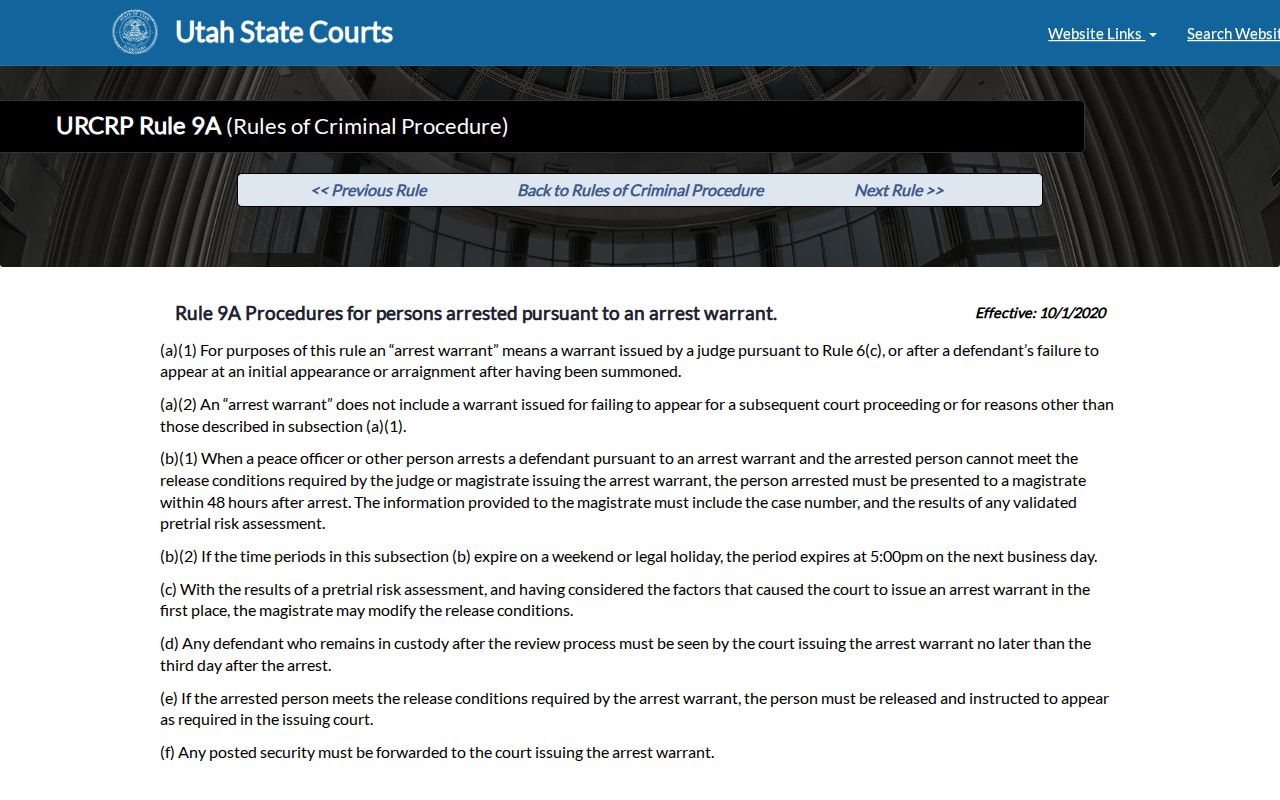
The rule’s timeline is not a guarantee about a specific release decision.
Comparing Arrest, Summons, and Bench Warrants
These terms mark different court steps. Rule 6 governs the initial summons-or-warrant choice and some failure-to-appear situations. A bench warrant is different. It can issue later, when a person misses a required court obligation. Read the notice and the court name. Iron County Justice Court holds a warrant active until bail is paid or the person appears before a judge; that rule is not every release decision, so confirm with the issuing court.
| Record | Purpose | Iron County route |
|---|---|---|
| Arrest warrant | Bring a person before court after probable-cause review | Issuing court and named agency |
| Summons | Direct a person to appear | Court on the notice |
| Bench warrant | Respond to a later missed appearance or court duty | Justice Court or Fifth District by case |
District, State, and Federal Records
BCI's free Utah file is the statewide public starting point. It only covers Utah warrants. A federal or out-of-state matter can still exist. Federal cases belong to the federal court system and the U.S. Marshals, not to any Iron County roster. Sealed filings may never reach a public docket search. For district and felony questions, the Fifth District Court location page gives the Cedar City court contact. Do not route a district case to the Justice Court payment window just because both courts sit in Cedar City. For full details, see Fifth District Court locations.
If There’s an Arrest Warrant for You
Find the issuing court and case number first. Then call that court, or a licensed Utah attorney, about what comes next. Ask whether Iron County permits a scheduled surrender. Ask what release terms would apply. The county posts no walk-in warrant-surrender hours, so a phone call is the only way to learn them. If the person is already in custody, the Jail's official bond page explains the cash and surety options, including the government photo ID and accepted funds a cash bond requires. The issuing court, not the jail, sets the exact bond amount, so keep the release paperwork and the next hearing date. The Jail page matters because bond posting happens there rather than at the Sheriff's records office.
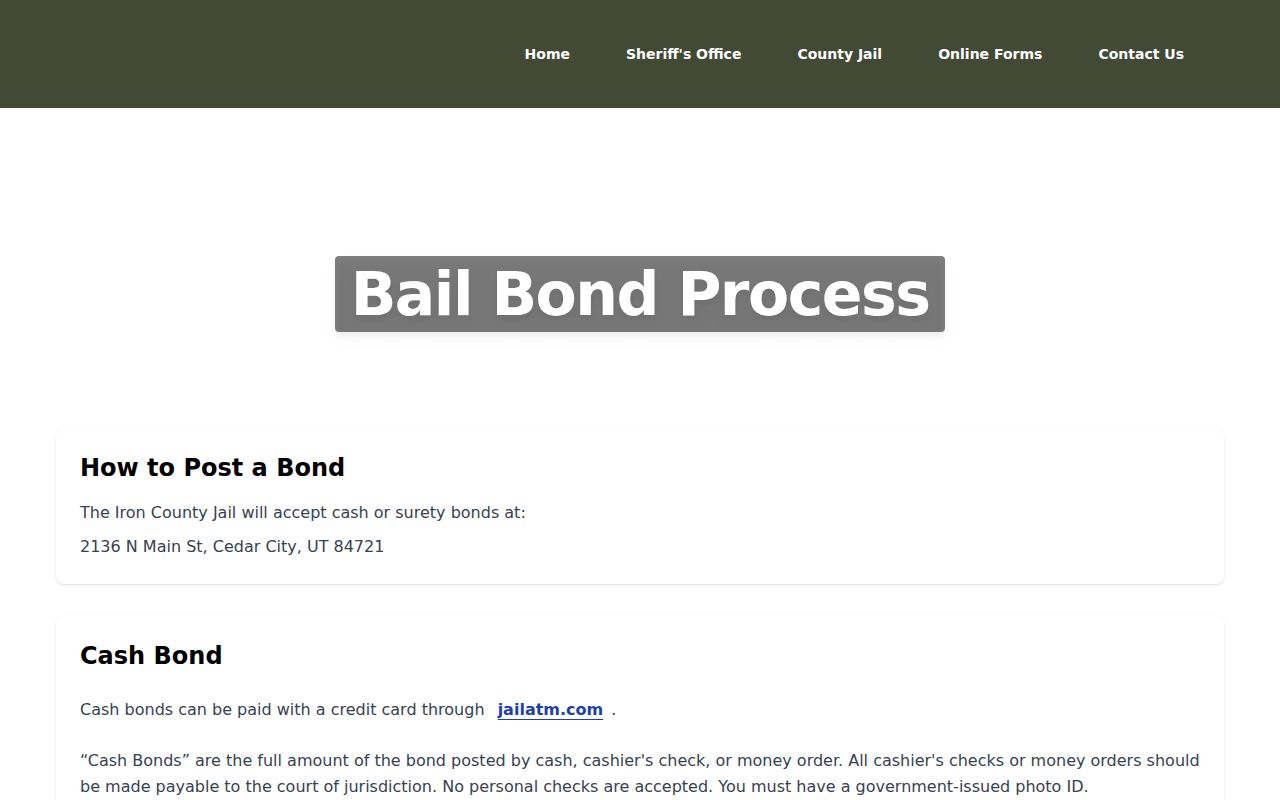
A bond can secure release without ending the underlying case.
Before a surrender: Confirm the court’s process and the Jail’s current instructions. Do not rely on a payment demand from an unsolicited caller.
Arrest Warrants, Summonses, and Service
BCI's statewide guide splits court warrant information from service updates. A result can show a court, a charge, warrant details, and service status. The docket behind it may hold other filings and orders. A warrant that has been served can stay in the statewide file for a time unless the issuing court recalls it. That is true in Iron County too. A Sheriff GRAMA response is not a recall; the agency may keep an execution or incident record, but only the issuing court changes a warrant's legal status.